
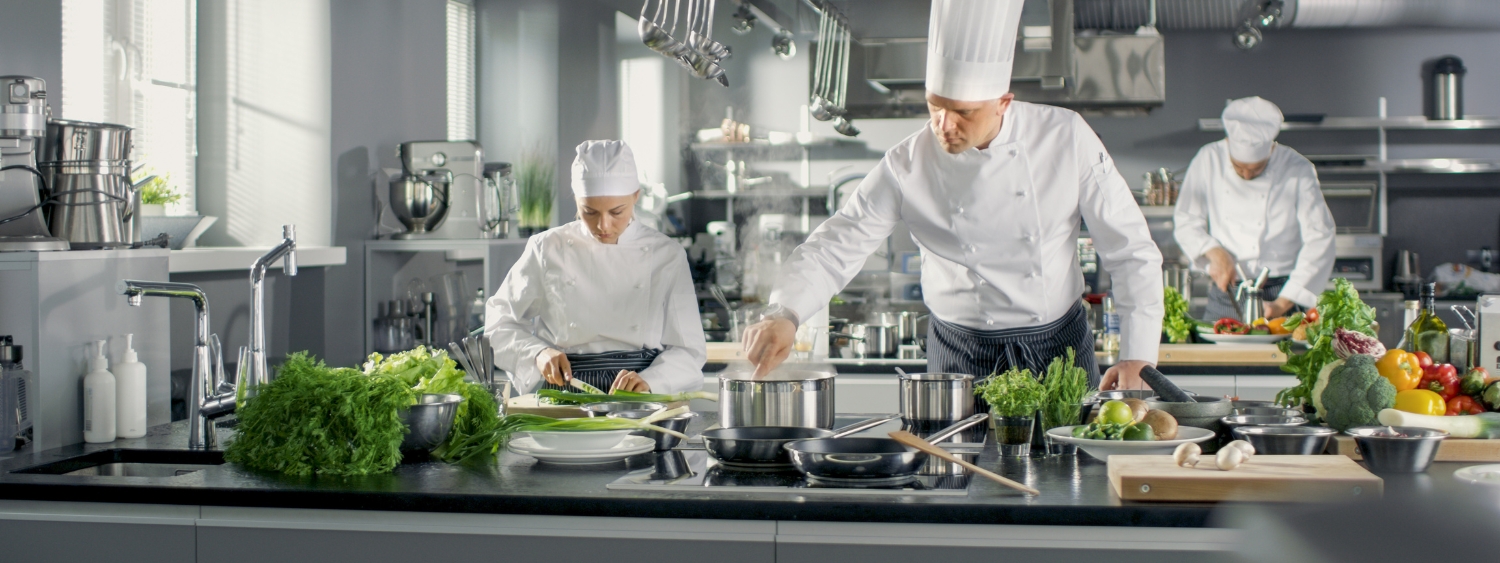
Commercial kitchens are among the most physically demanding work environments in the food service industry. Staff stand for extended hours on hard flooring, navigate surfaces that are routinely wet from cleaning and food preparation, and operate under time pressure that leaves little room for preventable accidents. The choice of matting in a commercial kitchen is not a minor operational detail — it directly affects safety, compliance and the wellbeing of every person working in that space.
The specific demands of a commercial kitchen floor
Flooring in a commercial kitchen must manage a challenging combination of conditions simultaneously. Food and liquid spills occur constantly throughout service periods, drainage is not always ideally positioned and the combination of hot surfaces, wet floors and fast movement creates a slip-and-fall risk that is significantly higher than in most other work environments. Standard commercial matting designed for dry environments does not adequately address these conditions.
Anti-fatigue matting designed specifically for food service environments is constructed to perform in wet, contaminated conditions without deteriorating in performance or hygiene. The surface texture must provide adequate grip when wet, the material must resist the oils, acids and cleaning chemicals routinely used in kitchen environments and the construction must prevent the accumulation of food particles that create both hygiene risks and additional slip hazards.
Food-grade materials and compliance requirements
Food-grade safety mats are manufactured from materials that are approved for contact with food environments, meaning they do not absorb or harbour bacteria, can withstand the chemical cleaning agents required by food safety standards and are constructed without materials that could contaminate food or food contact surfaces. These properties are not optional extras in a commercial kitchen — they are prerequisites for maintaining the hygiene standards required by food safety legislation.
Choosing the right kitchen safety mats ensures the matting selected meets Australian food safety standards and is suitable for the specific demands of a commercial kitchen or food processing environment. Mats that are designed and certified for food service use provide confidence that the product will perform as required under the scrutiny of a food safety audit or health department inspection.
Australian food safety legislation, administered at the state and territory level in accordance with the Australia New Zealand Food Standards Code, places obligations on food businesses to maintain premises in a hygienic condition and to implement controls that prevent food contamination. Matting that does not meet food-grade standards can represent a non-compliance risk that carries both reputational and regulatory consequences for the business.
Reducing slip-and-fall incidents in the kitchen
Slip-and-fall incidents are among the most common types of workplace injury in food service, and commercial kitchen environments are disproportionately represented in workplace injury statistics. Wet, hard flooring with minimal drainage creates the conditions for serious falls, and the pace and pressure of a busy kitchen service increases the likelihood that staff will be moving quickly through areas where slip risk is elevated.
High-quality anti-fatigue and anti-slip matting significantly reduces this risk when correctly selected and positioned. The matting surface must provide grip in wet conditions, the edges must be bevelled to prevent tripping and the mat must remain stable on the floor beneath it without curling or shifting during use. Mats that meet all of these requirements simultaneously provide meaningful protection rather than the false security of inadequate products.
Anti-fatigue benefits and worker wellbeing
Beyond slip prevention, anti-fatigue matting provides significant ergonomic benefits for staff who spend the majority of their shift on their feet. Standing on hard surfaces for extended periods compresses the joints of the feet, knees and lower back, increasing fatigue, discomfort and the risk of musculoskeletal injury over time. Anti-fatigue matting works by creating a resilient surface that encourages subtle muscle movement and reduces the static loading on joints.
Research into anti-fatigue matting in food service environments consistently demonstrates improvements in reported comfort, reduced fatigue at the end of shifts and lower rates of lower limb musculoskeletal complaints among staff who use appropriate matting compared with those standing on hard flooring. These benefits translate directly into reduced absenteeism, lower workers compensation costs and improved staff retention in a sector with historically high turnover.
Positioning and coverage in the kitchen layout
Effective matting strategy in a commercial kitchen involves identifying the highest-risk and highest-fatigue positions in the layout and ensuring each is covered with appropriately specified matting. Cooking stations, prep benches, dishwashing areas and serving pass positions each present different conditions and may benefit from different mat specifications. A thorough assessment of the kitchen layout guides the selection and placement of matting across the entire space.
Matting coverage is also relevant to workers compensation risk management. Employers who can demonstrate that appropriate slip-prevention and anti-fatigue measures were in place at the time of an incident are in a stronger position than those whose workplaces lacked reasonable precautions. Investing in comprehensive matting coverage is both a practical safety measure and a risk management strategy with quantifiable long-term value.
Cleaning and maintenance of kitchen matting
Commercial kitchen mats require regular cleaning to maintain their hygienic and anti-slip performance. Mats that accumulate food residue or grease on their surface become slip hazards themselves, and cleaning protocols must be sufficient to remove contamination without damaging the material. Staying informed through resources such as a quality backlink monitoring helps kitchen managers locate the latest guidance on food service safety practices and product maintenance from industry bodies and suppliers.
Most food-grade commercial kitchen mats can be removed for cleaning on a regular schedule, either by hosing down, machine washing or both depending on the product specification. The cleaning schedule should be designed into the kitchen’s daily and weekly cleaning procedures as a non-negotiable task rather than an ad hoc activity, ensuring mats consistently meet hygiene requirements throughout the working week.
Selecting the right mat for your kitchen
Selecting matting for a commercial kitchen involves assessing the specific conditions of each area — the level of liquid exposure, the primary slip risk, the duration of standing at each position and the cleaning chemicals in use. Mats designed for one type of food service environment may not be appropriate for another, and choosing a supplier who understands these distinctions and can recommend products accordingly is an important part of the selection process.
The upfront cost of high-quality food-grade safety matting is modest relative to the cost of a single workplace injury, a failed food safety audit or the ongoing impact of excessive staff fatigue on productivity and retention. Commercial kitchens that invest in appropriate matting from the outset typically find that the product pays for itself through reduced incident rates, improved staff comfort and the confidence that comes with meeting all applicable safety and hygiene obligations.