
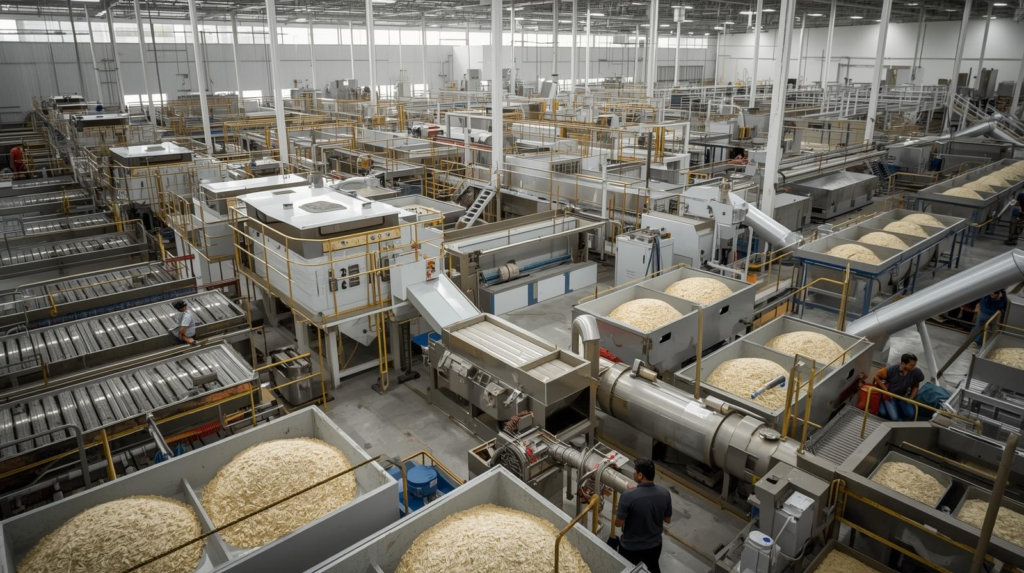
Many rice mill owners begin with a modest setup. A few machines, a manageable production capacity, and a small but reliable customer base. But as demand grows, a practical challenge appears. How do you expand your mill without creating operational problems?
Scaling a rice mill is not just about increasing capacity. It requires adding the right mill machinery at the right stage of growth. When expansion happens in a planned manner, production improves, grain quality remains consistent, and the entire operation runs smoothly.
Across India, many mill owners face difficulties because upgrades happen without a clear strategy. Understanding which rice mill machinery to add at each growth stage helps you scale operations gradually while protecting efficiency and profitability.
Understanding Growth Stages in a Rice Mill and the Right Mill Machinery to Add
Every rice mill grows through different operational stages. The mill machinery required in the beginning is very different from the equipment needed when production increases.
Below are the common growth stages and the mill machinery additions that typically support each phase.
Stage 1: Building a Stable Milling Foundation
At the initial stage, the focus remains on creating a reliable and stable processing system. Most small mills start with essential mill machinery that handles the core steps of rice processing.
The objective here is simple. You want machines that deliver steady output without frequent interruptions.
Typical machinery in this stage often includes cleaning equipment, basic dehusking systems, and primary whitening machines. This level of rice mill machinery allows a mill to process paddy efficiently while maintaining acceptable grain quality.
Many mill owners at this stage focus on affordability. However, choosing durable mill machinery even at the beginning can prevent maintenance issues later. A strong foundation makes future expansion much easier.
Stage 2: Improving Rice Quality and Processing Efficiency
Once a mill begins receiving more orders, the next challenge becomes rice quality and processing consistency. Buyers start expecting better finishing and uniform grains.
At this stage, upgrading mill machinery becomes important for improving polishing quality and reducing grain breakage.
Additional polishing machines, better grading systems, and improved separation equipment often become part of the processing line. These additions help enhance the visual appearance and market value of rice.
Many growing mills in India reach a point where the original rice mill machinery struggles to keep up with higher loads. Upgrading, polishing, and grading equipment helps the mill maintain both efficiency and product quality.
Stage 3: Increasing Production Capacity
As the mill builds stronger relationships with traders and distributors, production demand increases. Processing larger volumes becomes the next priority.
At this stage, scaling operations requires expanding the overall mill machinery capacity rather than simply improving quality.
Additional milling lines, higher capacity whiteners, and advanced grain handling systems often become necessary. These machines help the mill process larger quantities of paddy without slowing down operations.
When mills expand capacity without upgrading mill machinery, bottlenecks appear in certain sections of the production line. Proper capacity planning ensures smooth grain flow across the entire system.
Stage 4: Automation and Operational Optimisation
As a rice mill grows further, operational efficiency becomes critical. Managing labour, maintaining consistent quality, and reducing waste become major concerns.
This is where more advanced rice mill machinery begins to play an important role. Automation systems, improved material handling equipment, and better grain sorting technologies can significantly improve daily operations.
Automated systems also help mill owners monitor performance and reduce human error. Well-planned rice mill machine upgrades at this stage often reduce operational costs while improving output quality.
For larger mills in India, these improvements help maintain competitiveness in an increasingly demanding market.
Stage 5: Strengthening Long-Term Reliability
At higher production levels, even small machine failures can disrupt the entire operation. This stage focuses on building a strong and dependable system.
Many established mills upgrade to more robust mill machinery that can handle continuous operation during peak seasons.
Improved structural design, better vibration control, and durable components help machines perform reliably under heavy loads. When mills invest in high-quality mill machinery, maintenance costs usually decrease over time.
Reliability becomes a key advantage for mills that supply large buyers and distributors.
Conclusion
Scaling a rice mill is a gradual journey rather than a single large upgrade. Each stage of growth brings different challenges, from improving grain quality to increasing production capacity and ensuring long-term reliability.
The key is to expand your mill machinery in a structured and practical way. When you add the right machines at the right stage, your operations remain stable even as demand increases.
For rice mill owners in India, thoughtful planning of mill machinery upgrades can prevent costly bottlenecks and unexpected downtime. It also ensures that the mill continues delivering consistent quality rice to the market.
By understanding the growth stages of a rice mill, you can make smarter decisions about mill machinery investments and build an operation that grows steadily for many years.