
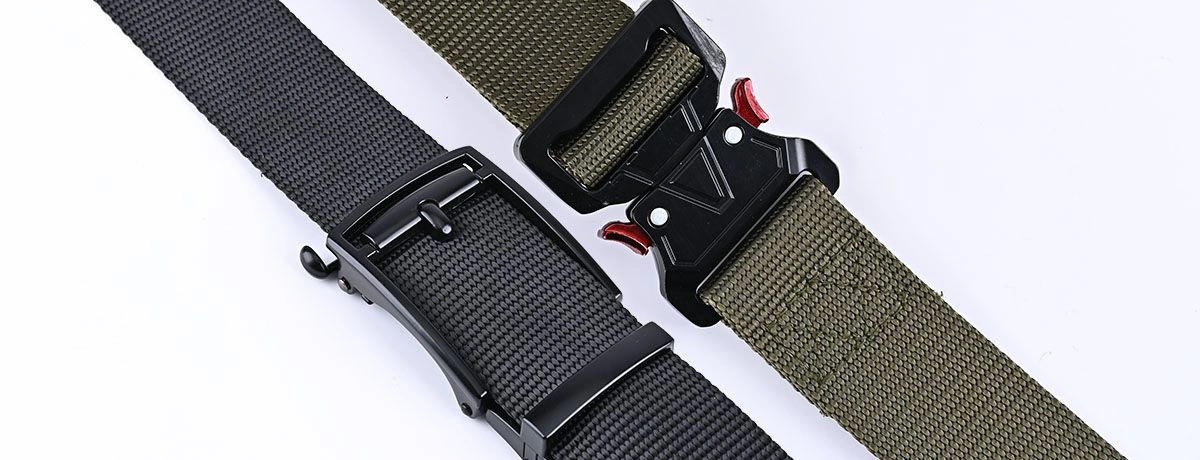
When people look at an industrial strap, they often see something simple. A length of woven material, a buckle, maybe a stitched loop. But behind that simplicity is a series of deliberate material choices. In load bearing assemblies, the strap is not just a connector. It is the backbone of the entire system.
Among the many options available, nylon webbing continues to stand out. From cargo restraints to safety harnesses and equipment mounts, nylon remains a go to material for engineers and designers. Whether you are cutting lengths to size or sewing nylon webbing into a larger textile assembly, the properties of nylon shape how the final product performs under real world stress.
Instead of focusing only on specifications like width and color, it helps to approach material selection from a performance mindset. What kind of forces will the strap experience? How often will it flex? Will it be exposed to abrasion, moisture, or temperature swings? Nylon earns its reputation because it answers many of these questions reliably.
Understanding Load Performance
At its core, nylon webbing is valued for its strength to weight ratio. It offers impressive tensile strength without adding unnecessary bulk. In industrial applications, this balance matters. A strap must hold weight securely while remaining manageable and flexible.
According to material property data referenced by organizations such as the National Institute of Standards and Technology, nylon exhibits strong tensile characteristics and good elasticity under load. More information on polymer material performance can be found through NIST. This elasticity allows nylon straps to absorb shock rather than transferring all force directly to hardware or anchor points.
That slight stretch can be a major advantage. In dynamic environments such as transportation or lifting applications, loads rarely remain static. Sudden shifts or vibrations occur. Nylon webbing can flex under these conditions, reducing stress concentrations and lowering the risk of sudden failure.
Abrasion Resistance in Demanding Environments
Industrial straps often rub against edges, machinery, or cargo surfaces. Over time, friction can weaken fibers and compromise structural integrity. Nylon performs well in abrasive conditions compared to many other synthetic fibers.
The woven structure of nylon webbing distributes surface wear across multiple filaments. Instead of cutting cleanly through the material, abrasion tends to gradually fuzz the surface. This visible wear can serve as an early warning sign before structural failure occurs.
Organizations like ASTM International provide standardized testing methods for abrasion resistance and tensile strength in textile products. Their resources outline how materials are evaluated for durability in industrial settings.
When selecting materials for straps and assemblies that will see repeated contact or friction, nylon offers a practical balance between durability and cost.
Flexibility Without Compromising Strength
One reason nylon remains popular in strap assemblies is its flexibility. Some high strength materials become stiff or brittle, especially in cold temperatures. Nylon maintains pliability across a wide temperature range, making it suitable for both indoor and outdoor use.
This flexibility is not just about comfort. In applications such as wearable gear or adjustable restraints, a strap must bend smoothly around contours without creating pressure points. Nylon webbing conforms to shapes more easily than rigid materials while still maintaining structural integrity.
Flexibility also simplifies assembly. When integrating straps into complex products, designers benefit from a material that can be folded, stitched, or layered without cracking or delaminating.
Moisture and Environmental Considerations
Nylon does absorb some moisture, which can temporarily affect its strength and dimensional stability. However, it generally retains much of its structural performance even in humid conditions. This makes it a practical choice for applications exposed to weather or occasional water contact.
For environments with extreme exposure, coatings or treatments can enhance nylon’s resistance to ultraviolet light or chemical contact. These modifications extend service life without changing the core mechanical properties of the webbing.
The Environmental Protection Agency provides guidance on material durability and environmental exposure in industrial applications. Their information highlights how material choice influences product longevity and environmental impact.
By understanding how nylon interacts with moisture and environmental stressors, manufacturers can specify appropriate grades and treatments to match application demands.
Compatibility With Hardware and Fastening Systems
Another advantage of nylon webbing is its compatibility with a wide range of hardware. Buckles, cam locks, rings, and hooks can all be integrated without complex modifications. Nylon’s strength allows it to work effectively with both metal and high strength polymer hardware.
Because nylon can be stitched securely, reinforced loops and load bearing points are relatively easy to create. Proper stitch patterns and thread selection are critical, but when executed correctly, the webbing and stitching work together as a cohesive system.
This adaptability supports modular design. Straps can be customized for specific lengths, widths, or attachment styles without changing the base material. That consistency simplifies inventory management and production planning.
Balancing Cost and Performance
In industrial settings, material selection always involves cost considerations. High performance fibers such as aramid or specialty composites may offer exceptional strength, but they often come with significantly higher price points.
Nylon provides a practical middle ground. It delivers strong mechanical properties, reliable abrasion resistance, and flexibility at a cost that supports large scale production. For many applications, it meets performance requirements without unnecessary expense.
The key is matching the grade and weave of nylon webbing to the intended load. Heavy duty assemblies may require thicker or denser weaves, while lighter applications can use narrower or thinner straps.
Designing With the Entire Assembly in Mind
Material selection for nylon based straps should never happen in isolation. The webbing is only one part of a larger assembly. Hardware, stitching, load direction, and user interaction all influence performance.
Designers should consider how forces travel through the entire system. If the strap is strong but the attachment point is weak, overall holding capacity will still be limited. Testing under realistic conditions ensures that nylon webbing performs as expected within the full assembly.
By viewing nylon not just as a material but as a structural component within a system, manufacturers can create strap assemblies that are reliable, adaptable, and efficient.
Nylon webbing continues to dominate industrial strap applications because it delivers where it matters most. It balances strength, flexibility, abrasion resistance, and cost in a way few other materials can. When selected thoughtfully and integrated carefully, it forms the foundation of durable and high performing strap assemblies across countless industries.